Category: Digital Marketing

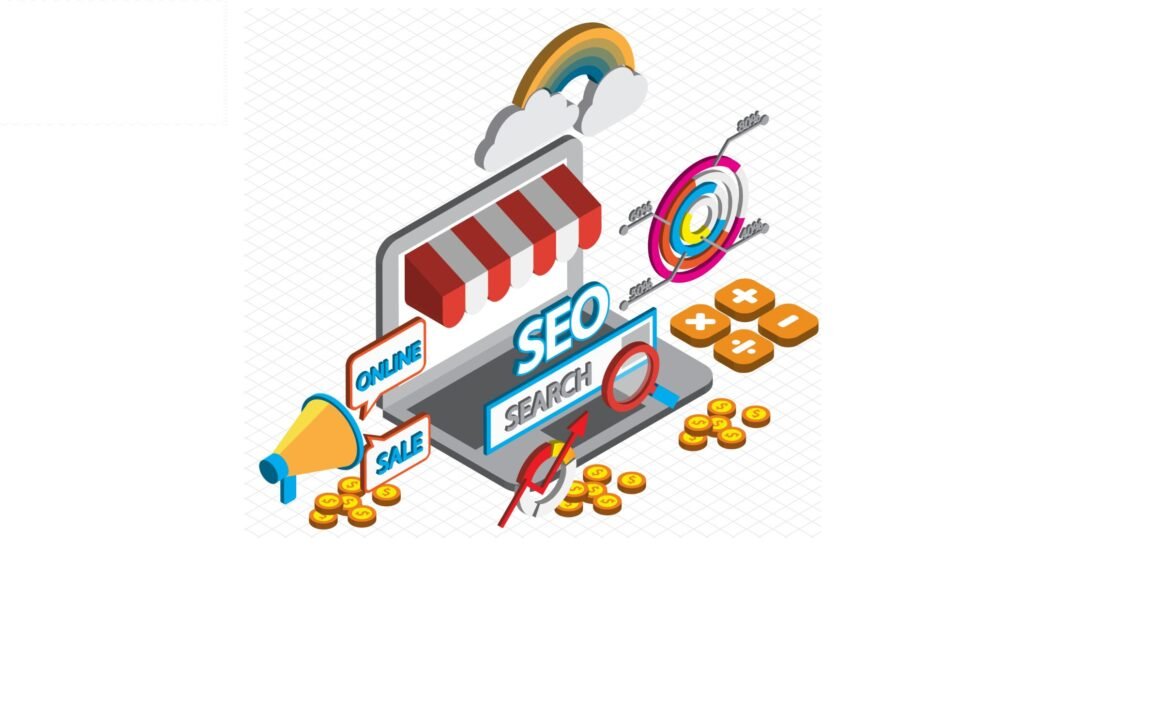
How SEO, Ads, and Websites Work Together to Generate Leads

In the modern digital landscape, most customers begin their buying journey online. Whether they are looking for a service, comparing products, or searching for solutions to a problem, the internet is usually the first place they go. For businesses, this creates a huge opportunity to attract potential customers and generate leads. Three important components play a major role in this process which are SEO, online advertising, and a well built website. These three elements form the foundation of digital lead generation. While each of them can work independently, the real results appear when they work together as part of a unified strategy. To understand how they generate leads, it is important to first understand the role each one plays.

The Role of SEO in Bringing Potential Customers

Search Engine Optimization, commonly known as SEO, focuses on improving a website so that it appears higher in search engine results when people search for relevant topics or services. When someone types a query on a search engine, they are usually looking for answers or solutions. Businesses that appear at the top of those results gain visibility and attract potential customers. SEO helps businesses reach people who are already interested in what they offer. For example, if someone searches for website development services, the companies that appear in the search results have a strong chance of receiving that visitor on their website.

The process of SEO involves optimizing content, improving website structure, and ensuring that the website provides useful information to users. Over time, this builds trust with search engines and increases the chances of ranking higher. Unlike paid advertising, SEO does not require paying for each click, which makes it a powerful long term strategy for generating traffic and potential leads. However, SEO usually takes time to produce results. It requires consistent content, technical optimization, and patience before rankings improve significantly.

How Online Ads Help Businesses Get Immediate Visibility

While SEO focuses on long term growth, online advertising provides immediate visibility. Platforms like Google Ads and Facebook Ads Manager allow businesses to show advertisements to highly targeted audiences.

When businesses run search ads, their advertisements appear at the top of search engine results for specific keywords. This allows them to reach potential customers instantly, even if their website has not yet achieved strong organic rankings. Advertising platforms also allow precise targeting. Businesses can choose who sees their ads based on location, interests, demographics, and online behavior. This level of targeting makes advertising extremely powerful for reaching people who are most likely to be interested in a particular product or service. Another advantage of ads is that results can be scaled. If a campaign is performing well and generating leads, the business can increase its advertising budget to reach a larger audience. However, ads work only as long as the campaign is active. Once the advertising budget stops, the traffic usually stops as well. This is why ads are often combined with SEO to create both short term and long term results.

The Website as the Center of Lead Generation

While SEO and ads are responsible for bringing visitors, the website itself plays the most important role in converting those visitors into leads. When a user clicks on a search result or advertisement, they arrive on a website. At that moment, the website must communicate clearly what the business offers and why the visitor should trust it. A professional and user friendly website helps create credibility and encourages visitors to take the next step.

A well designed website usually provides clear information about services, answers common questions, and guides visitors toward taking action. This action could be filling out a contact form, requesting a quote, booking a consultation, or calling the business directly. The structure of the website also plays a major role in conversion. Fast loading speed, mobile responsiveness, simple navigation, and strong call to action all help increase the chances of turning visitors into leads. In simple terms, if SEO and ads bring people to the door, the website is what convinces them to step inside.

How SEO, Ads, and Websites Work Together

When these three elements work together, they create a complete digital marketing system that consistently attracts and converts potential customers. SEO helps businesses build a steady stream of organic visitors over time. Ads provide immediate traffic and allow companies to target specific audiences quickly. Both of these channels direct users to the website, which acts as the central platform where conversions happen.

For example, a business offering digital marketing services might publish helpful blog articles optimized for search engines. These articles attract visitors who are researching marketing strategies or learning about online growth. At the same time, the company might run targeted ads for users searching directly for marketing services. Both types of visitors eventually land on the same website. If the website is designed effectively, it provides clear service information, builds trust through testimonials or case studies, and encourages visitors to contact the company. This combination creates a continuous cycle where traffic flows in from multiple channels and the website converts that traffic into leads.

Conclusion

SEO, ads, and websites are not separate marketing tools that operate independently. Instead, they function best when they support each other as part of a complete digital strategy. SEO brings long term organic visibility, advertising provides quick and targeted traffic, and the website acts as the platform that converts visitors into potential customers.

When businesses integrate these three components effectively, they create a powerful system for attracting the right audience and generating consistent leads. Rather than relying on a single channel, combining SEO, online advertising, and a strong website allows companies to build sustainable growth and remain competitive in today’s digital environment.

Why Google Ads Rewards High-Converting Landing Pages

Many people think Google Ads success depends only on spending more money. They believe businesses with bigger budgets always win. But Google Ads does not work like that. Google wants users to have a good experience when they click on ads. If users click an ad and quickly leave the website because the page is slow, confusing, or irrelevant, Google sees that as a bad experience. On the other hand, if users stay on the page, interact with it, and take action, Google understands that the landing page is useful. This is why Google rewards high-converting landing pages. A landing page is one of the most important parts of any Google Ads campaign because it directly affects conversions, ad rankings, and even advertising costs. Businesses that focus on improving their landing pages often get better results without increasing their ad budget.

In this blog, we will understand why Google values high-converting landing pages and how they help businesses succeed with Google Ads.

What Is a Landing Page?

A landing page is the webpage people visit after clicking on an advertisement. For example, if someone searches for “best online yoga classes” and clicks your Google ad, the page they arrive on is called the landing page. The purpose of a landing page is simple. It should encourage visitors to take a specific action. That action could be buying a product, filling out a form, booking a service, or signing up for a free trial. A good landing page helps visitors quickly understand what the business offers and why it is useful for them.

Why Google Pays Attention to Landing Pages

Google’s main goal is to keep users satisfied. If people repeatedly click ads and reach poor-quality websites, they may stop trusting Google Ads completely. Imagine clicking an ad for affordable shoes and landing on a slow website filled with unrelated products and confusing information. Most users would leave immediately. Google wants to avoid this situation. That is why it checks whether landing pages are helpful, relevant, and easy to use. When users have a positive experience on a landing page, Google sees the ad as more valuable. As a result, Google may reward the advertiser with better ad positions and lower costs.

What Makes a Landing Page High-Converting?

A high-converting landing page is a page that successfully turns visitors into customers or leads. The page should immediately explain the offer in a clear and simple way. Visitors should not feel confused after arriving on the page.The design also matters. A clean layout with easy navigation usually performs better than a page filled with too many popups, animations, or distractions. Loading speed is another important factor. Modern users are impatient. If a landing page takes too long to load, many visitors leave before even reading the content. Trust also plays a big role in conversions. People feel more comfortable when they see customer reviews, testimonials, secure payment symbols, and clear contact information. All these elements together help increase conversion rates.

The Connection Between Landing Pages and Quality Score

Google uses something called Quality Score to measure the quality of ads and landing pages. Quality Score affects how well your ads perform. A better score can help your ad appear in higher positions while also reducing your advertising costs. One major factor behind Quality Score is landing page experience. If your landing page is fast, relevant, and useful, Google sees it as a positive experience for users. This improves your Quality Score. But if the page is slow, difficult to navigate, or unrelated to the ad, your score may decrease. This is why businesses that improve their landing pages often see better ad performance without increasing their budget.

How Better Landing Pages Reduce Advertising Costs

Many advertisers are surprised to learn that a strong landing page can actually lower their cost per click. Google prefers ads that create a good user experience. If your landing page performs well and converts visitors successfully, Google may reward your ads with lower costs. This means you may pay less than competitors even if they are bidding more money. For example, imagine two businesses selling the same product. One has a fast and trustworthy landing page, while the other has a slow and confusing website. Google is more likely to favor the first business because users are having a better experience there. This system encourages advertisers to focus on quality instead of only increasing their budget.

Why Mobile-Friendly Pages Matter

Today, a large percentage of internet users browse websites on their phones. Because of this, Google strongly values mobile-friendly landing pages. If users open a page on mobile and struggle to read the text or click buttons, they will quickly leave the website. A mobile-friendly landing page adjusts properly to smaller screens, loads quickly, and remains easy to use. Businesses that ignore mobile optimization often lose many potential customers. Google notices these poor experiences and may reduce the performance of those ads.

The Importance of Relevance

Google also checks whether the landing page matches the ad content. If an ad promises a discount on laptops, the landing page should clearly show laptop deals. Visitors should immediately find what they expected.

When users see content that matches the ad, they are more likely to stay on the page and convert. But if the landing page feels unrelated, users leave quickly. This creates a poor experience and can negatively affect ad performance. Keeping the ad, keywords, and landing page connected is extremely important.

Why Testing Is Important

Successful businesses continuously improve their landing pages through testing. They may test different headlines, button text, layouts, or images to see which version performs better. Sometimes even small changes can improve conversion rates significantly. For example, changing a button from “Submit” to “Get Started” may encourage more users to click because it sounds more welcoming. Testing helps businesses understand what users prefer and allows them to improve results over time.

Final Thoughts

Google Ads is not only about spending money. Google wants users to have a positive experience after clicking on advertisements. That is why Google rewards high-converting landing pages. When a landing page is fast, relevant, mobile-friendly, trustworthy, and easy to use, users are more likely to stay and take action. Google notices these positive signals and may reward the advertiser with better rankings, lower costs, and more conversions. Many businesses focus only on creating ads, but the real success often depends on what happens after the click. A strong landing page can improve the performance of your Google Ads campaigns and help your business grow much faster in the long run.

How to Create Professional Videos Using AI Video Generating Tools

Video content has become one of the most powerful ways to communicate with audiences online. Businesses, marketers, educators, and content creators are increasingly using video to promote products, explain services, and engage viewers on social media platforms. However, producing high quality videos traditionally required professional editing skills, expensive software, and significant time investment. AI video generating tools have changed this process completely by making video creation faster, easier, and more accessible.

With the help of AI powered platforms like Pictory AI, Synthesia, InVideo, Lumen5, and Runway ML, users can convert simple text or scripts into engaging videos within minutes. These tools automate tasks such as scene creation, voiceovers, subtitles, and visual editing. As a result, even beginners can produce professional quality videos for marketing, education, and social media.

Understanding AI Video Generating Tools

AI video generating tools are software platforms that use artificial intelligence to automatically produce videos from written content or templates. Instead of manually editing footage, users simply provide a script or select a template. The AI system then generates scenes, adds visuals, background music, voice narration, and transitions.

Many AI video platforms also offer features such as automated subtitles, stock media libraries, AI avatars, and multilingual voiceovers. These capabilities make it possible to produce professional videos for a wide range of uses including product promotions, training videos, social media ads, and explainer videos.

Choose the Right AI Video Generator

The first step in creating professional videos is selecting the right AI video generating tool. Different platforms offer different features depending on your needs. For example, InVideo is popular for social media video creation because it offers thousands of customizable templates and easy editing tools. Runway ML is known for advanced AI video editing features such as background removal, motion tracking, and AI powered effects..

Prepare a Clear Video Script

Before generating a video, it is important to prepare a clear and structured script. The script serves as the foundation of your video and determines how the message will be communicated to viewers. A well written script helps the AI tool generate relevant visuals and maintain a smooth flow throughout the video.

Start by identifying the main objective of your video. Whether you want to educate, promote a product, or explain a concept, the script should deliver a clear message. Keep sentences concise and focus on delivering valuable information that keeps viewers engaged.

Select the Right Visual Style

AI video generators provide a variety of visual templates and design styles. Selecting the right visual style is essential for creating a professional appearance. The style should match your brand identity and the purpose of the video.

For example, educational videos may benefit from simple and clean visuals, while promotional videos may require more dynamic animations and transitions. Consistent colors, fonts, and layouts can also improve brand recognition and make the video more visually appealing.

Use AI Voiceovers and Subtitles

Many AI video generating tools include advanced voiceover features that automatically convert text into natural sounding narration. These voiceovers eliminate the need for manual recording and allow creators to produce professional narration in multiple languages.

Adding subtitles is also important for accessibility and viewer engagement. Many users watch videos on social media without sound, so subtitles help ensure that the message is still understood. AI tools can automatically generate captions and synchronize them with the voiceover.

Add High Quality Visual Content

Professional videos rely heavily on strong visual elements. AI video generators often provide access to extensive libraries of stock images, video clips, icons, and animations. Selecting relevant visuals can significantly improve the overall impact of the video.

Make sure the visuals support the message of your script. For example, product demonstrations should include product related footage, while educational content may use diagrams, icons, or animated explanations. High quality visuals help maintain viewer attention and make the video look more polished.

Optimize the Video for Different Platforms

Once the video is generated, it is important to optimize it for the platform where it will be published. Different platforms such as YouTube, Instagram, and LinkedIn have different video format requirements.

Short vertical videos work well for social media platforms, while longer horizontal videos are more suitable for YouTube or presentations. AI video tools often provide export options that allow users to select the correct aspect ratio and resolution for each platform.

Review and Finalize the Video

Although AI video generators automate much of the process, reviewing the final video is still important. Check the script alignment, visual transitions, and audio quality to ensure everything flows smoothly. Minor adjustments to timing, text placement, or visuals can further improve the professionalism of the video.

A final review also helps ensure that branding elements such as logos, colors, and messaging remain consistent throughout the video.

Benefits of Using AI Video Generating Tools

AI video generating tools offer several advantages for content creators and businesses. They significantly reduce production time, eliminate the need for advanced editing skills, and lower the cost of video creation. These tools also allow teams to quickly produce multiple videos for marketing campaigns, tutorials, and social media engagement.As artificial intelligence continues to evolve, video creation is becoming more automated and accessible. Businesses that adopt AI video tools can produce consistent and professional video content while saving time and resources.

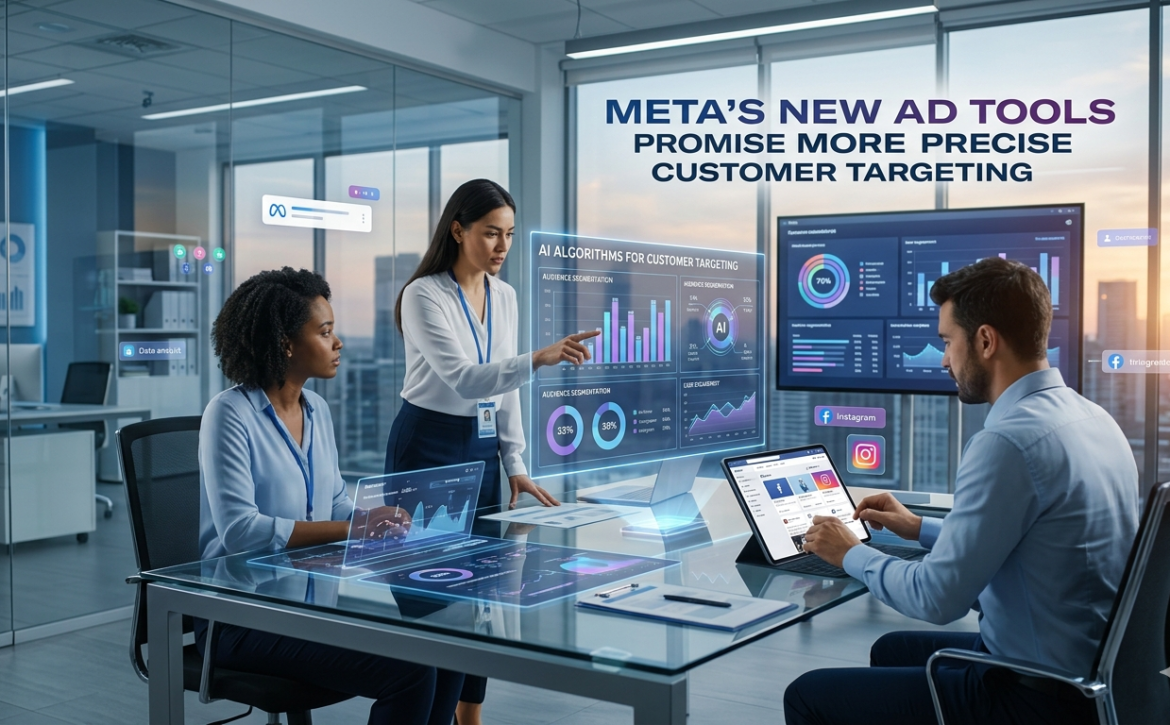
Meta’s New Ad Tools Promise More Precise Customer Targeting

Digital advertising continues to evolve rapidly, and businesses must keep pace with new technologies to remain competitive. Recently, Meta Platforms introduced a new suite of advertising tools designed to help marketers target customers with greater precision and efficiency. These tools are aimed at improving campaign performance across platforms like Facebook and Instagram by leveraging artificial intelligence, advanced data insights, and automation.

For businesses and marketers, these updates signal a major shift in how customer targeting and advertising optimization will work in the coming years.

The Evolution of Meta Advertising

Over the past decade, digital advertising has moved from simple demographic targeting to highly sophisticated data driven marketing strategies. With billions of active users across its platforms, Meta Platforms has access to vast amounts of behavioral and engagement data.

However, changes in privacy regulations and platform policies have made traditional tracking methods less effective. Updates such as Apple App Tracking Transparency significantly reduced the ability of advertisers to track user behavior across apps and websites.

To address these challenges, Meta has focused heavily on AI powered advertising tools that rely more on machine learning and less on third party tracking.

What Are Meta’s New Ad Tools

Meta’s new advertising tools are designed to automate campaign optimization while improving targeting accuracy. These tools combine artificial intelligence, predictive analytics, and real time performance data to identify high value audiences.

One of the most significant improvements is the use of AI to predict which users are most likely to convert. Instead of relying only on predefined audience segments, the system analyzes patterns such as user engagement, browsing behavior, and purchase intent.

This allows advertisers to reach customers who may not fit traditional targeting categories but still have a high probability of becoming buyers.

Advantage Plus Campaign Enhancements

A key component of Meta’s new advertising strategy is the expansion of its automated campaign system known as Meta Advantage+.

Advantage Plus campaigns automate several aspects of digital advertising including audience selection, ad placement, and budget distribution. Rather than manually adjusting campaign settings, advertisers can rely on AI to determine which combinations deliver the best results.

The system continuously analyzes performance data and automatically reallocates budget toward high performing audiences and ad creatives.

This automation helps businesses save time while maximizing the return on advertising investment.

Better Customer Insights and Data Modeling

Another major feature of the new tools is improved customer insight modeling. By analyzing large datasets, Meta’s AI can identify patterns that indicate purchase intent.

For example, if a user frequently engages with content related to travel, fashion, or technology, the algorithm can categorize that user into predictive interest groups.

These insights allow businesses to build smarter campaigns that target users at the right stage of the buying journey.

Additionally, Meta has improved its conversion modeling technology. This helps advertisers estimate campaign performance even when certain tracking signals are unavailable due to privacy restrictions.

Improved Creative Testing and Optimization

Creative content plays a major role in advertising success. Meta’s new tools introduce more advanced creative testing capabilities that help marketers determine which images, videos, and messaging resonate best with audiences.

Through AI powered testing, multiple variations of an advertisement can be analyzed simultaneously. The system automatically prioritizes the highest performing creatives and scales them to larger audiences.

This ensures that campaigns remain dynamic and continuously optimized.

Platforms like Instagram and Facebook particularly benefit from this feature because visual content often drives engagement and conversions.

Benefits for Businesses and Marketers

Meta’s new ad tools provide several advantages for businesses that rely on digital marketing.

First, they simplify campaign management. Automated optimization reduces the need for manual adjustments and technical expertise.

Second, improved targeting helps businesses reach more relevant audiences. By focusing on predictive behavior rather than static demographic categories, campaigns can identify new customer segments.

Third, businesses can achieve better return on investment. With smarter budget allocation and performance analysis, advertisers can maximize the value of their marketing spend.

Small and medium sized businesses may benefit the most from these tools because automation allows them to compete with larger brands that have dedicated marketing teams.

The Role of Artificial Intelligence in Advertising

Artificial intelligence is becoming the backbone of modern advertising technology. Companies like Meta Platforms are investing heavily in machine learning systems that can analyze massive datasets and generate actionable insights.

AI powered systems are capable of identifying patterns that human analysts might overlook. They can also adapt campaigns in real time based on performance data.

As digital ecosystems grow more complex, AI driven tools will likely become essential for marketers who want to remain competitive in online advertising.

Challenges and Privacy Considerations

Despite the benefits, these new tools also raise questions about data privacy and transparency.

Consumers are increasingly concerned about how their personal information is collected and used. Regulatory frameworks such as General Data Protection Regulation and other privacy laws require companies to handle user data responsibly.

To address these concerns, Meta has emphasized privacy focused technologies such as aggregated data modeling and on platform analytics.

These approaches aim to balance effective advertising with stronger user privacy protections.

The Future of Digital Advertising

The introduction of Meta’s advanced advertising tools reflects a broader trend toward automation and AI driven marketing. As algorithms become more sophisticated, advertisers will rely less on manual targeting and more on predictive modeling.

For businesses using Facebook and Instagram, these innovations offer an opportunity to improve campaign efficiency and connect with customers in more meaningful ways.
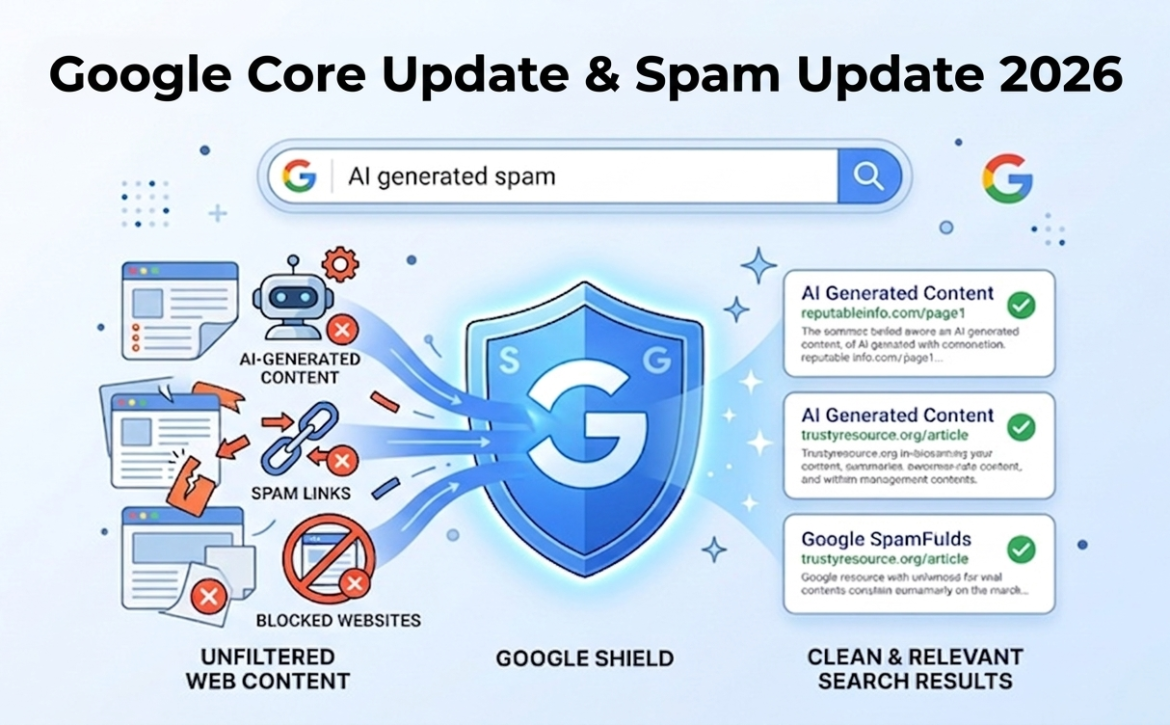

Google March 2026 Search Changes: Understanding the Core Update and Spam Update

In March 2026, Google introduced a series of major algorithm improvements aimed at improving search quality and removing low value content from search results. These changes focused heavily on identifying manipulative SEO practices, low quality AI generated text, and link schemes that attempt to manipulate rankings. Two major updates played a central role in this transformation: the core update and the spam update. Together, these updates represent Google’s latest effort to maintain trustworthy search results and prioritize authentic, expert driven content.

Why Google Introduced These Updates

Over the past few years, the internet has experienced a massive increase in automated content creation. Many websites began publishing AI generated articles that imitate human writing but lack real knowledge, research, or expertise. While some AI assisted content can be useful, Google identified a growing problem where large volumes of low quality articles were created purely to rank in search results.

This flood of automated digital clutter made it harder for users to find trustworthy information. To solve this issue, Google launched a spam update followed shortly by a broader core update to refine how websites are evaluated in search rankings.

Understanding the Spam Update

The March 2026 spam update specifically targeted websites that rely on manipulative SEO strategies. Google’s algorithm now detects and penalizes sites that publish content designed only to trick search engines rather than help users.

One major target of the spam update was low quality AI generated content. Many sites were producing articles that sounded human but contained shallow information, repeated phrases, or inaccurate details. Google’s systems have improved their ability to recognize these patterns and reduce the rankings of such pages.

Another focus of the spam update was unnatural link building. Some website owners were using private link networks or buying large numbers of backlinks to artificially increase their authority. The update also addressed parasite SEO tactics where third parties publish low quality content on high authority websites simply to exploit their ranking power.

Interestingly, the spam update rolled out very quickly compared to typical Google updates. This rapid rollout suggests that Google had already developed strong detection systems and wanted to immediately remove harmful content from search results.

What the Core Update Changes

After the spam update, Google introduced a broader core update designed to improve overall search rankings. While the spam update focuses on removing harmful practices, the core update focuses on improving how Google evaluates useful and trustworthy content.

The core update analyzes multiple signals related to expertise, experience, authority, and trustworthiness. Websites that provide original research, expert insights, and helpful information are more likely to benefit from this update.

Many legitimate websites that previously struggled to compete against spam heavy competitors may begin to see ranking improvements after the core update settles. This update helps ensure that high quality content receives the visibility it deserves.

Impact on Website Owners and SEO Professionals

These updates send a clear message to website owners and SEO professionals. Shortcuts and manipulative tactics are becoming increasingly ineffective. Google’s algorithms are evolving quickly and can now detect patterns that previously slipped through the cracks.

Websites relying on automated content generation without human expertise may experience ranking losses due to the spam update. Similarly, sites using aggressive backlink schemes or parasite SEO strategies risk losing search visibility.

On the other hand, websites that focus on original content, genuine expertise, and helpful user experiences may see positive gains from the core update.

How to Adapt to the New Algorithm Changes

To succeed after the March 2026 updates, website owners should prioritize quality over quantity. Content should demonstrate real knowledge, practical experience, and clear value for readers.

Instead of publishing hundreds of automated pages, businesses should focus on well researched articles that answer real user questions. Natural backlinks from reputable sources are also far more valuable than large quantities of low quality links.

Another important step is to maintain transparency. Clearly showing author expertise, citing credible sources, and providing accurate information helps build trust with both users and search engines.

The Future of Search Quality

The March 2026 updates highlight Google’s ongoing mission to improve the web ecosystem. By targeting spam tactics and rewarding authentic expertise, Google aims to make search results more useful for everyone.

The spam update removes manipulative and automated content that pollutes search results, while the core update improves Google’s ability to recognize valuable, trustworthy information.For website owners who focus on real value and genuine expertise, these updates may ultimately create a fairer and more reliable search environment. As Google continues refining its algorithms, the long term success of any website will depend on authenticity, quality, and user trust.

How Technology Is Changing the Way Designers Create Visual Content

Technology has transformed nearly every creative industry, and graphic design is no exception. Over the last decade, rapid advancements in digital tools, artificial intelligence, automation, and cloud based platforms have significantly changed how designers create visual content. What once required hours of manual work can now be completed in minutes with the help of advanced software and smart design tools.

For designers, this shift has opened new opportunities to work faster, collaborate more effectively, and produce highly engaging visual content across multiple digital platforms.

The Rise of Advanced Design Software

Modern design software has dramatically improved the way designers approach visual creation. Tools like vector editors, photo editing platforms, and layout software now offer powerful features that simplify complex design tasks. These tools allow designers to manipulate images, typography, and graphics with incredible precision.

Many platforms also include templates, automation features, and real time previews that help designers quickly test different design concepts. This speeds up the creative process while maintaining high quality results. As a result, designers can focus more on creativity rather than spending excessive time on technical tasks.

Artificial Intelligence in Graphic Design

Artificial intelligence is one of the most influential technologies reshaping the design industry. AI powered tools can now generate layouts, suggest color palettes, recommend fonts, and even create complete visual compositions.

These tools analyze design patterns, user behavior, and large datasets to provide intelligent suggestions. Designers can use AI as a creative assistant that speeds up brainstorming and ideation. Instead of replacing designers, artificial intelligence enhances their capabilities and helps them produce innovative designs more efficiently.

Cloud Based Collaboration

One of the biggest changes technology has introduced is cloud based collaboration. Designers are no longer limited to working on a single device or sharing large files through complicated processes.

Cloud design platforms allow multiple team members to work on the same project simultaneously. Designers, developers, and clients can review and comment on designs in real time. This improves communication and ensures that projects move forward quickly without delays.

Cloud storage also provides secure access to design assets from anywhere in the world. Whether working remotely or collaborating across different time zones, teams can stay connected and maintain efficient workflows.

Automation and Design Efficiency

Automation has significantly reduced the time required for repetitive design tasks. Many design tools now include automated features such as resizing graphics for different platforms, generating multiple layout variations, and organizing design assets.

For example, a designer creating content for social media may need to produce the same graphic in several different sizes. Automation tools can instantly generate these variations, saving hours of manual work.

This efficiency allows designers to focus on strategy, creativity, and storytelling rather than repetitive production work. Automation also helps maintain consistency across branding and marketing materials.

The Influence of Data Driven Design

Technology has also introduced data driven design strategies. Designers can now use analytics and user behavior data to guide their creative decisions. This approach helps ensure that visual content not only looks appealing but also performs effectively.

For example, designers can analyze which colors, layouts, or typography styles generate higher engagement rates on websites or social media platforms. This data allows them to refine their designs and create visuals that better connect with audiences.

3D Design and Motion Graphics

Advancements in technology have expanded the possibilities of visual storytelling through 3D graphics and motion design. Designers now have access to tools that allow them to create immersive animations, interactive graphics, and realistic 3D visuals.

Motion graphics have become especially important for digital marketing, video content, and user interfaces. Animated visuals capture attention more effectively than static images and help communicate complex information in a clear and engaging way.

Similarly, 3D design technology allows brands to create visually stunning product displays, advertisements, and virtual experiences.

The Growth of Responsive Design

With the increasing use of smartphones, tablets, and multiple screen sizes, responsive design has become essential. Technology enables designers to create visuals that automatically adapt to different devices and platforms.

Responsive design tools allow designers to preview how graphics will appear on various screens before publishing them. This ensures that visual content remains consistent and visually appealing regardless of where it is viewed.

As digital consumption continues to grow, responsive design technology will remain a critical part of the creative process.

The Future of Design Technology

The future of graphic design will continue to evolve as new technologies emerge. Artificial intelligence, augmented reality, and immersive digital experiences will likely play an even greater role in visual content creation.

Designers who embrace these technologies will gain a competitive advantage in the creative industry. By combining technical tools with human creativity, designers can produce more impactful and engaging visual experiences.

By combining creative design practices with modern digital tools, companies like Achyutam Technology are playing an important role in shaping how businesses create and distribute visual content in the technology driven era.

Complete Ecommerce SEO Strategy for Success 

Ecommerce SEO Growth Strategy: A Complete Guide to Building a Successful Online Store 

Ecommerce is evolving faster than ever. Changing customer behavior, new technologies, and digital platforms are reshaping how people discover and buy products online. To stay competitive, businesses must focus on search visibility, user experience, and data-driven marketing strategies. 

Modern ecommerce success is not just about selling products it is about creating optimized experiences that attract high-intent customers and convert them into loyal buyers. 

Industry experts highlight that ecommerce growth depends on optimizing SEO, content, internal linking, and platform innovation to stay competitive in a rapidly changing market. 

Understanding Ecommerce SEO: The Foundation of Online Growth 

Ecommerce SEO refers to optimizing online stores so that product and category pages rank higher in search engines. Unlike traditional websites, ecommerce platforms must optimize thousands of pages while maintaining performance and relevance. 

Key elements of ecommerce SEO include: 

  • Product page optimization 
  • Category page structure 
  • Technical SEO 
  • Internal linking 
  • Content strategy 

1. Optimize Product Pages for Search and Conversions 

Product pages are the most important assets in an ecommerce website. A well-optimized product page should include: 

  • Clear product titles and descriptions 
  • High quality images 
  • Structured data markup 
  • Customer reviews and ratings 
  • SEO-friendly URLs 

AI-driven search engines and traditional search engines both rely on product data to understand relevance and intent. 

When product pages are optimized properly, they attract users who are ready to buy. 

2. Build a Strong Site Structure and Internal Linking 

A clear site structure helps both users and search engines navigate your store easily. 

Best practices include: 

  • Logical category hierarchy 
  • SEO friendly navigation 
  • Internal links between related products and categories 

Experts recommend improving internal linking and content strategy to strengthen ecommerce SEO and user experience. 

A strong structure improves crawlability and boosts rankings across the website. 

3. Create High Value Content for Ecommerce 

Content is no longer optional for ecommerce brands. Informational content helps attract users in the research stage, while commercial content drives conversions. 

Effective ecommerce content includes: 

  • Buying guides 
  • Blog articles 
  • Comparison pages 
  • FAQs 
  • Tutorials 

Strategic content helps ecommerce brands connect with customers and adapt to evolving expectations.  

4. Leverage Ecommerce Platforms and Technology 

Modern ecommerce platforms like Shopify, WooCommerce, and BigCommerce offer tools that enhance performance and customer experience. 

Key technologies shaping ecommerce include: 

  • Personalization engines 
  • AI-driven recommendations 
  • Shopping graphs 
  • Data analytics tools 

Technology-driven optimization helps brands deliver faster, smarter, and more personalized shopping experiences. 

5. Focus on User Experience and Conversion Rate Optimization 

SEO alone is not enough. Ecommerce success depends on how users interact with your website. 

Important UX factors include: 

  • Fast page speed 
  • Mobile responsiveness 
  • Simple checkout process 
  • Clear call-to-action buttons 

When user experience improves, conversion rates increase significantly. 

6. Adapt to Changing Consumer Behavior 

Online shoppers expect seamless, personalized, and fast experiences. Their expectations are constantly evolving due to digital trends and technology. 

Research shows that ecommerce continues to evolve due to changing consumer behavior, technological advancements, and marketing trends. 

Brands that understand customer behavior can design strategies that increase engagement and retention. 

7. Use Data and Analytics for Ecommerce Growth 

Data-driven decision making is essential for scaling ecommerce businesses. 

Key metrics to track: 

  • Organic traffic 
  • Conversion rate 
  • Average order value 
  • Customer lifetime value 
  • Bounce rate 

Using data helps businesses identify opportunities and optimize their marketing strategies. 

8. Prepare for the Future of Ecommerce and AI Search 

AI-powered search and personalization are transforming ecommerce discovery. Online stores must prepare for: 

  • AI-driven product recommendations 
  • Voice search 
  • Visual search 
  • Multimodal content 

The future of ecommerce belongs to brands that combine SEO, technology, and customer centric strategies. 

Conclusion: Building a Sustainable Ecommerce Growth Strategy 

Ecommerce success is not achieved overnight. It requires a combination of SEO optimization, content marketing, technology adoption, and customer experience improvement. 

Brands that invest in structured SEO, high-quality content, and innovative technology will dominate search results and customer attention. 

In today’s competitive digital landscape, ecommerce businesses must move beyond traditional marketing and adopt a holistic growth strategy that focuses on visibility, trust, and long-term customer value. 

How to Generate llms.txt

As AI models and search engines evolve, websites are adapting to new standards to improve visibility and ensure better interaction with large language models (LLMs). One such emerging trend is the use of the llms.txt file — a structured document designed to communicate with AI crawlers. This guide will explain what llms.txt is, why it’s important, and how to generate it for your website effectively.

What is llms.txt?

The llms.txt file is similar to robots.txt, but it is specifically meant for large language models like ChatGPT, Gemini, or Claude. While robots.txt instructs web crawlers about which pages to index or ignore, llms.txt guides AI models on how they can use, summarize, or reference your website’s content.

This file allows website owners to define permissions for AI training and content usage, providing better control over data visibility and intellectual property protection.

Why You Should Use llms.txt

  1. Control Over Data Access: Decide which parts of your content can be used by AI models for training or summarization.
  2. Protect Intellectual Property: Restrict the use of proprietary or sensitive information.
  3. Improve AI Representation: Help models understand how to cite or summarize your brand accurately.
  4. Transparency: Promote ethical AI usage by providing clear guidelines for automated systems.

How to Create an llms.txt File

Step 1: Open a Text Editor
Use any plain text editor such as Notepad, Visual Studio Code, or Sublime Text to create the file.

Step 2: Define Access Rules
Write your rules in a clear, structured format. Here’s a sample template:

# Example llms.txt file for your website
User-agent: *
Disallow: /private/
Allow: /public/
Allow: /blog/

# Optional: Define usage terms for AI models
Policy: Do not use this content for training purposes without permission.
Contact: info@yourdomain.com

Explanation:
  • User-agent specifies the AI crawlers you’re addressing (use * for all).
  • Disallow and Allow determine which parts of the site are off-limits or open.
  • Policy adds extra instructions regarding data use.
  • Contact provides a way for AI developers to reach you for permissions.

Step 3: Save the File
Save the file as llms.txt (in lowercase).

Step 4: Upload to Your Website Root Directory
Upload the file to your website’s root directory — for example:
https://www.yourdomain.com/llms.txt

This ensures that AI crawlers can easily locate it when scanning your site.

Step 5: Test Accessibility
After uploading, visit the file’s URL in your browser to confirm that it loads correctly.

Best Practices for Managing llms.txt

  • Update regularly as your site structure or policies change.
  • Keep the rules concise and easy to interpret.
  • Clearly define your stance on AI content usage.
  • Monitor how LLMs interact with your website over time.

Conclusion

The llms.txt file is a proactive step toward responsible and controlled AI data sharing. As artificial intelligence continues to reshape digital interactions, businesses should use this tool to protect their content while ensuring fair and ethical AI collaboration.

At Achyutam Technology, we stay at the forefront of digital innovation, helping brands adapt to emerging AI and SEO trends. Our team ensures your website remains compliant, visible, and future-ready in this evolving landscape.

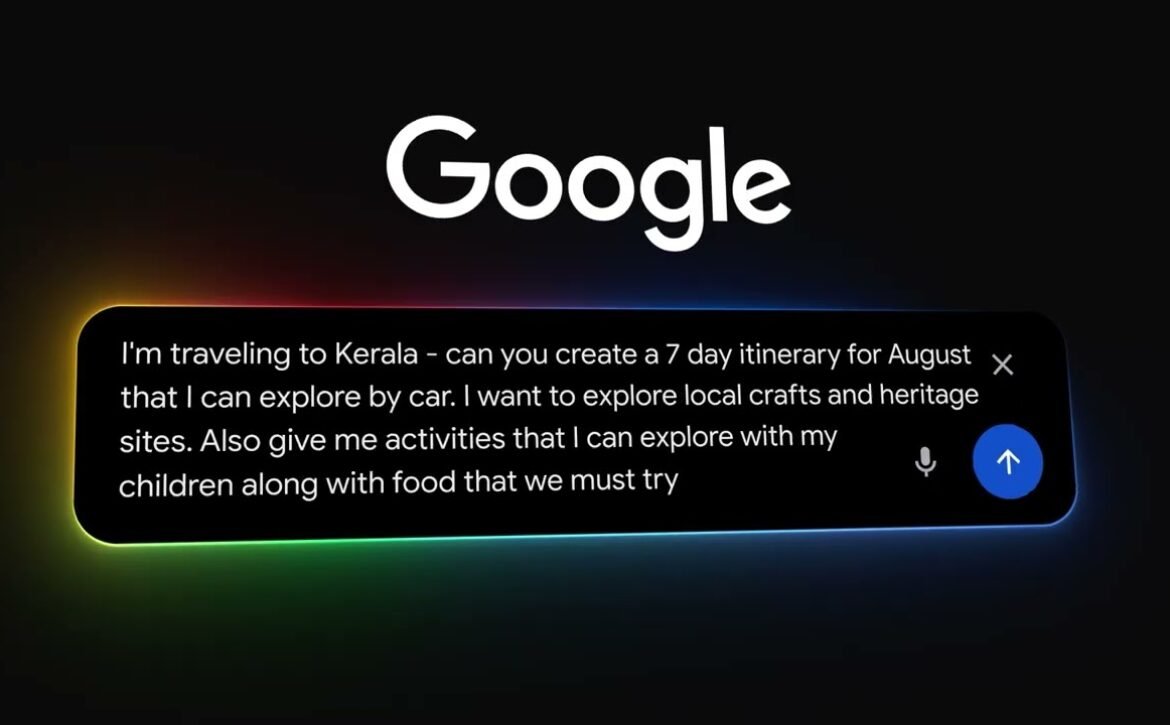
Inside Google’s New AI Mode: The Future of Search Has Arrived

🔍 What Is Google’s AI Mode?

  • A new AI-centric tab in Search
    AI Mode appears as a catalyst in Google Search and Google app—alongside other tabs like “All” or “Images.” It reframes search results into a chat-like conversational experience based on Gemini AI .
  • Simultaneous “query fan-out” searches
    When you ask a question, AI Mode breaks it into multiple sub-queries to scan various web resources in parallel, merging them into a cohesive, thorough response.
  • Conversational follow-up
    Like a chatbot, AI Mode lets you ask follow-up questions directly within the interface, refining or expanding your search as the dialogue continues.

⚙ïļ Advanced Features According to CNET

  1. Deep Search (coming soon):
    Enhanced research mode pulling from hundreds of sources to create expert-level, cited reports .
  2. Live Camera Search (Search Live):
    Integrates with Google Lens—point your camera at an object or text and engage in real-time, spoken Q&A about what you see.
  3. Agentic Mode:
    Soon the assistant will act on your behalf—booking tickets, making reservations, or filling out forms—all under your supervision.
  4. Personalized, Context-Aware Responses:
    Optional tailoring via Gmail and other Google account data to provide location or preference-based suggestions.
  5. Custom Data Visualizations:
    For queries involving numbers—like finance stats or sports—you’ll get generated charts and graphs.

✅ Why It Matters

  • More intuitive search:
    Instead of sifting through blue links, AI Mode combines conversational answers with traditional results
  • Enhanced user engagement:
    Google’s own data shows users often stick longer with AI interactions, driving deeper search habits
  • Publisher impact & ethical trade-offs:
    Despite improved user experience, publishers may lose traffic as users skip clicking into sites. Critics say AI Mode is “burying the web alive”
  • Unfinished design:
    Some AI-generated answers can be confidently wrong or outdated. Accuracy and privacy are flagged as ongoing concerns.

🚀 Availability & Rollout

  • Initial U.S. launch:
    Rolled out May 20, 2025, using Gemini 2.5 AI; currently available in the U.S., soon expanding globally
  • Coming to India & beyond:
    AI Mode has also begun rolling out in India, with a goal to reach more regions soon
  • Labs access for previewing future features:
    Users can join Search Labs to test Deep Search, agent capabilities, camera Q&A, and personalized assistance.

🌐 Final Take

Google’s AI Mode marks a profound shift—from passive searching to interactive, intelligent assistance. It offers promising features like research tools, live camera interaction, and task automation. But with great power comes great responsibility: accuracy and fairness to publishers will be key tests in its journey.

Exploring the Use of AI in Digital Marketing

In the ever-evolving landscape of digital marketing, one force stands out for its transformative impact: Artificial Intelligence (AI). What was once limited to sci-fi is now deeply embedded in every facet of digital strategy—from audience segmentation and content creation to predictive analytics and automated customer engagement.

As brands battle for attention in a crowded marketplace, AI isn’t just a luxury—it’s becoming a necessity. In this in-depth guide, we’ll explore how AI is revolutionizing digital marketing, backed by real-world examples, practical applications, and a look into what the future holds.

What is AI in Digital Marketing?

Artificial Intelligence refers to a set of technologies—such as machine learning, natural language processing, and deep learning—that enable machines to mimic human intelligence. In digital marketing, AI is used to analyze data, make decisions, automate processes, and even interact with users.

Key AI technologies in marketing include:

  • Machine Learning (ML): Algorithms that learn from data to improve outcomes.
  • Natural Language Processing (NLP): Used for voice assistants, chatbots, and content generation.
  • Computer Vision: Enables AI to “see” and understand visual content.
  • Predictive Analytics: Anticipates future behavior based on historical data.

Why AI Matters in Digital Marketing

With user data increasing exponentially, marketers can no longer rely solely on human analysis and manual execution. AI helps:

  • Unlock deeper insights into customer behavior.
  • Deliver hyper-personalized experiences at scale.
  • Automate repetitive and time-consuming tasks.
  • Increase campaign effectiveness and ROI.

According to Statista, global spending on AI in marketing is projected to reach over $100 billion by 2030.

Top Applications of AI in Digital Marketing

1. Hyper-Personalization at Scale

Modern customers expect tailored experiences. AI makes this possible by analyzing:

  • Browsing history
  • Purchase behavior
  • Device usage
  • Social media interactions

This allows marketers to dynamically personalize emails, web content, ads, and product recommendations.

Example: Amazon uses AI to analyze purchase behavior and deliver personalized shopping experiences that account for nearly 35% of its sales.

2. Predictive Analytics and Lead Scoring

AI helps brands move from reactive to proactive marketing. With predictive analytics, businesses can:

  • Forecast demand trends
  • Identify churn risks
  • Optimize pricing
  • Score leads for sales-readiness

HubSpot, for instance, incorporates AI to prioritize leads, helping sales teams focus on the prospects most likely to convert.

3. Chatbots and Virtual Assistants

AI chatbots offer:

  • 24/7 customer support
  • Multilingual interaction
  • Fast response time
  • Consistent brand tone

These bots use NLP and ML to learn from interactions and improve over time.

Tools like Drift and LivePerson have helped brands reduce support costs and improve lead conversion by as much as 40%.

4. AI-Powered Ad Targeting

Programmatic advertising uses AI to automate the buying and placement of ads in real-time. It:

  • Targets the right audience at the right time
  • Adjusts ad bids dynamically
  • Reduces wasted ad spend

Platforms like Google Ads and Facebook Ads now use AI to power Smart Campaigns and custom audience recommendations.

5. Automated Content Creation

AI tools can now generate:

  • Ad copy
  • Email subject lines
  • Social media captions
  • Blog content drafts

Tools such as Copy.ai and Jasper help marketers scale content creation while maintaining brand voice.

Did you know that The Washington Post uses AI (Heliograf) to write real-time news reports?

6. Visual Recognition in Marketing

With AI’s computer vision capabilities, marketers can:

  • Automatically tag and categorize images
  • Track brand visibility in user-generated content
  • Optimize visual search in e-commerce

Pinterest’s Visual Lens and Google’s Vision AI are prime examples of how image recognition is reshaping search behavior.

Benefits of AI Integration in Digital Marketing

BenefitDescription
Efficiency & AutomationSpeeds up tasks like A/B testing, content scheduling, and data analysis.
Smarter Decision-MakingReal-time data helps marketers pivot quickly and make evidence-based decisions.
Personalized ExperiencesCreates tailored content journeys that resonate more deeply with users.
Cost-EffectivenessReduces waste in ad spend, improves ROI, and optimizes resource allocation.
ScalabilityHandles millions of data points without increasing workforce.

Common Challenges in AI Adoption

While AI promises great returns, businesses often face the following hurdles:

1. Data Privacy and Compliance

Navigating GDPR, CCPA, and other privacy laws is critical. AI tools must be designed to process data ethically and with user consent.

2. Technology Complexity

Integrating AI requires technical expertise and often new infrastructure. Many businesses lack in-house capabilities.

3. Over-Automation Risks

Too much reliance on AI can lead to robotic, impersonal interactions. Balancing AI with human empathy is crucial.

4. Budget Constraints for SMEs

While large enterprises can afford robust AI platforms, smaller businesses must start with simpler tools or managed services.

Future Trends in AI for Marketing

As technology matures, new trends are emerging that will further shape marketing strategies:

1. Voice Search Optimization

With the rise of smart speakers, optimizing for voice search will be key. AI helps interpret conversational queries and adapt content accordingly.

2. Generative AI for Video and Graphics

AI tools are now capable of creating videos, infographics, and animations—saving both time and money for marketing teams.

3. Emotion AI and Sentiment Analysis

This tech analyzes facial expressions and tone of voice to gauge emotional response—ideal for improving ad creative and customer service.

4. Augmented Reality (AR) + AI

Combining AR with AI leads to immersive shopping experiences. Imagine virtual try-ons powered by personalized AI recommendations.

How to Start Using AI in Your Marketing Strategy

If you’re just beginning to explore AI in your digital efforts, start small:

Use AI-powered tools like Grammarly, Canva’s Magic Write, or ChatGPT to assist with content
Integrate a basic chatbot using services like Tidio or ManyChat
Leverage smart email marketing platforms like Mailchimp or Klaviyo
Use AI-based analytics dashboards like Google Analytics 4 or SEMrush

Over time, evolve toward more complex solutions like custom predictive models or advanced automation platforms.

Bringing AI Into Action — Seamlessly

Successfully integrating AI into digital marketing requires strategy, experience, and the right technology partners. For brands seeking end-to-end support—from planning to execution—working with an expert team ensures long-term value.

One such example is Achyutam, a digital solutions company that helps businesses integrate AI seamlessly into their marketing operations. From AI-driven analytics and automation to intelligent content strategies, Achyutam enables brands to scale smarter and engage more deeply with their audience. Their tailored, data-first approach ensures businesses can compete effectively in an AI-first world.

Explore how their AI-driven digital marketing services can elevate your growth—visit achyutam.net today.

Final Thoughts

AI is no longer a futuristic concept—it’s an essential component of competitive digital marketing. It enhances productivity, improves customer experiences, and empowers brands to make smarter, data-driven decisions.

The sooner businesses embrace AI, the better positioned they’ll be for tomorrow’s marketing landscape. Whether you’re a startup looking for efficiency or an enterprise aiming for scale, integrating AI into your strategy will unlock new growth opportunities.

Now is the time to evolve. Now is the time to market smarter—with AI.